Why ventilation matters more than heat
On a sunny spring day, a closed greenhouse heats up fast, much faster than most people expect. Seedlings wilt, tomato flowers drop and fungus moves in when the air is hot, still and humid. Most first-year losses come from too much heat and too little air, not from cold. Ventilation is how you stop it.
The principle is simple. Hot air rises, so it needs a way out at the top. Cooler air then comes in lower down, through the door, a side window or a louver. Two openings, high and low, create a draft. One opening alone moves very little air.
How many vents each kit includes
Here is what the pages we read on November 12, 2026, list for each kit:
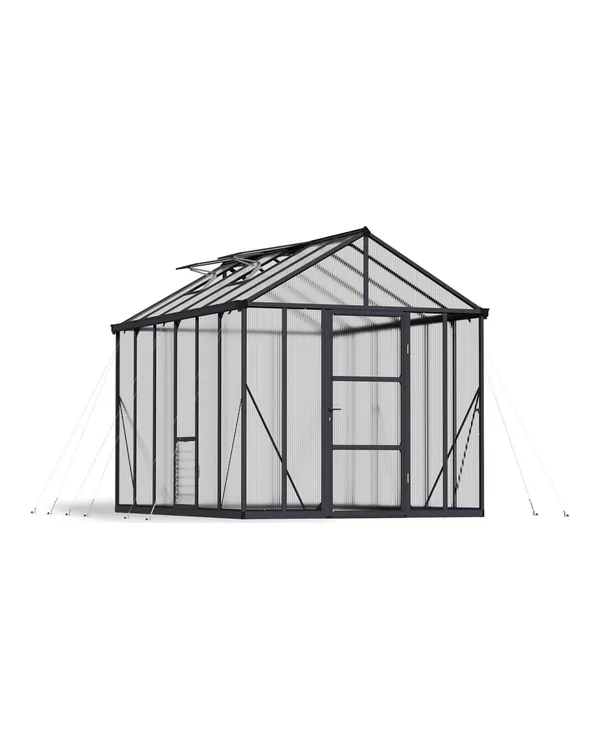
- Palram Glory 8x12: two roof vents with automatic openers plus a side louver. The best equipped on our list.
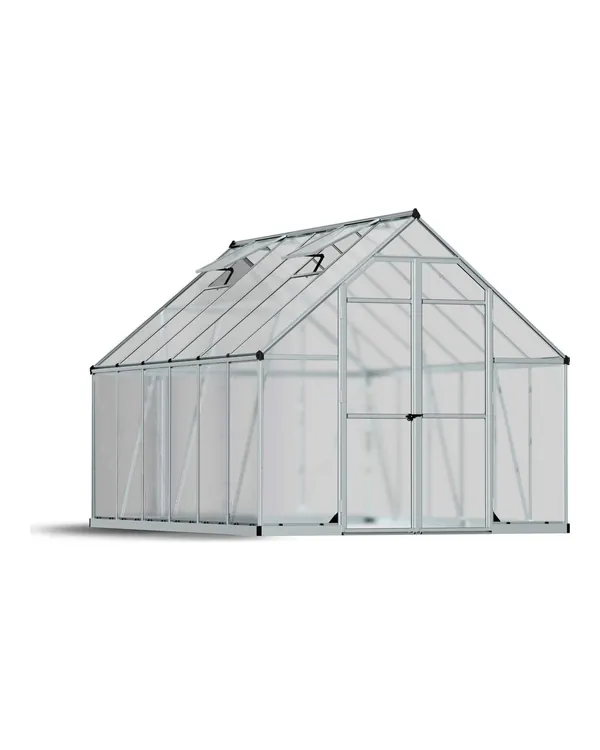
- Essence, Balance and Snap & Grow: two adjustable roof vents. Rion Grand Gardener: two roof vents too.
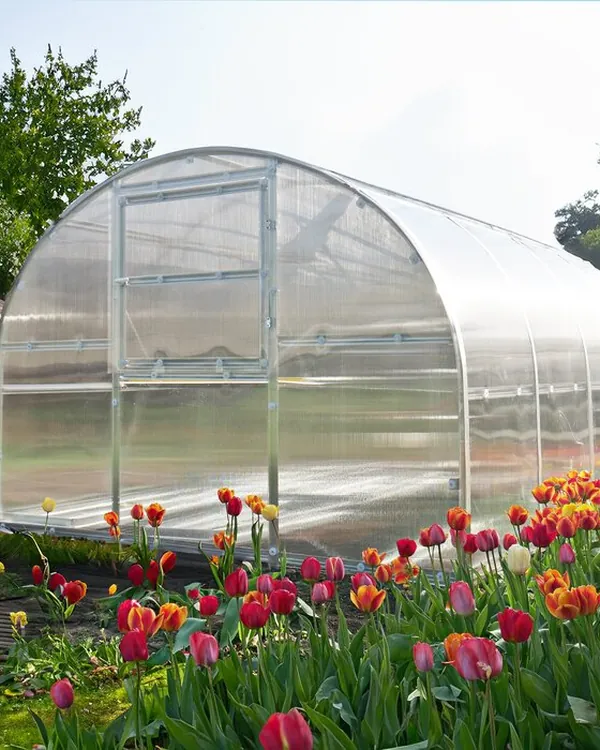
- Bloomcabin High Tunnel: two side windows; an automatic roof vent is sold separately. Outsunny 8x16: two adjustable windows.
- Mythos, Hybrid and Outsunny 6x8: one roof vent.
- YourGreenhouses Polycarbonate and Arrow: a door and one back window; roof vents are $95 each. Scandiglas: one roof window, with an automatic opener at $139.
Ventilation counts for 5% of our score: important, but easy to upgrade, unlike panels or snow ratings.
Roof vents, louvers and windows
Roof vents are the most effective opening because they let out the hottest air. Most kits have hinged vents you prop open at several positions. Louvers are slatted windows, usually low on a side wall, that let cool air in without a draft blasting your seedlings. Side windows, like the two on the Bloomcabin tunnel, do the same job on a bigger scale. And the door is your biggest vent of all: on hot days, prop it open.
Automatic vent openers
The best upgrade for anyone who works away from home. An automatic opener uses a cylinder of wax that expands as it warms, pushing the vent open with no electricity, then closing it as the greenhouse cools. The Palram Glory has two in the box; for other kits they are an add-on (YourGreenhouses lists one for the Scandiglas at $139). Set it up on the first warm day of spring, and you will stop rushing home at lunch to open the roof.
A simple summer routine
Morning: open the door and the roof vents as soon as the sun hits the greenhouse, before it heats up, not after. Water the roots, not the leaves. Midday: on hot days, add shade cloth or whitewash the roof, and leave everything open. Evening: close up as the air cools if nights are chilly, or leave a vent cracked in high summer to let damp air out. Check a min-max thermometer each morning; it tells you whether yesterday's routine worked. It takes two minutes a day and saves more plants than any gadget.
Fans, shade and humidity
In hot climates, vents alone may not keep up in July. A small circulating fan keeps air moving around the plants, which helps against mildew even when the vents are closed in winter. Shade cloth over the roof cuts the heat at the source. And water in the morning, not the evening, so leaves dry before the cool, damp night. These are cheap habits that make a bigger difference than any spec sheet.
Choosing a kit with good airflow
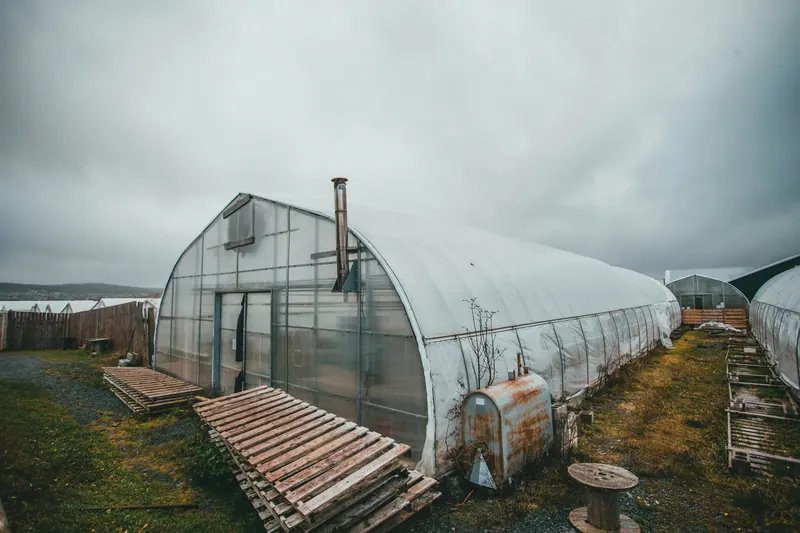
When you compare kits, count the openings and where they are. Two roof vents beat one, and a low louver or side window makes them work much better. Long tunnels need openings at both ends: the Bloomcabin has two side windows, while the YourGreenhouses tunnels have a door at one end and a window at the other, plus optional roof vents. Check whether automatic openers are included; on the Glory they are, which is part of why it tops our overall ranking. And look at the door: wide double doors, like the Essence's 47 in, double as a giant vent on hot days.
Ventilation mistakes that cost plants
Waiting until it feels hot. By the time you notice the heat on your face, seedlings have already had an hour of it. Open early, close in the late afternoon. Opening only the door. A door lets cool air in low, but without a roof vent the hot air has nowhere to go, so it pools above your plants. Blocking the vents. Hanging baskets, shade cloth pinned the wrong way and tall tomato vines can all choke a roof vent by midsummer; keep the opening clear. Forgetting the forecast. A spring morning that starts cloudy can turn sunny by eleven. If you won't be home, leave a vent open a crack or fit an automatic opener. Shutting everything in a storm and forgetting to reopen. Close vents for high wind, then open them again the next morning. Ignoring the floor. Wet gravel and soggy paths keep humidity high, so water in the morning and let the floor dry by evening.
None of this needs gadgets. A thermometer at plant height, a habit of checking it and one well-placed roof vent solve most problems; the kits with two or three openings, like the Palram Glory, simply make it easier.
Ventilation in winter
Even in winter, a greenhouse needs some air. On a sunny January day the temperature inside can climb quickly, and closed, damp air invites mold. Crack a vent at midday and close it well before evening. If you heat your greenhouse, a little airflow also keeps condensation down. More on that in our winter heating guide.
The kits in this guide, side by side
| Greenhouse | Palram Glory 8x129.5/10 | Palram Essence 8x129.0/10 | Bloomcabin High Tunnel9.1/10 |
|---|---|---|---|
| Price | $4,349 | $1,899 | $3,372.97 |
| Size | 8' x 12' · 95.6 sq ft | 8' x 12' · 95.4 sq ft | 9'11" x 13'2" · 129 sq ft |
| Price per sq ft | $45.49/sq ft | $19.91/sq ft | $26.15/sq ft |
| Panels | 10 mm polycarbonate | 4 mm polycarbonate | 6 mm polycarbonate |
| Snow load | 20 lb/ft² | 15 lb/ft² | 32.8 lb/ft² |
| Wind rating | 60 mph | 56 mph | Not stated |
| Peak height | 8'10" peak | 7'7" peak | 6'11" peak |
| Warranty | 10-year | 5-year | 12-year |
| Buy | See price | See price | See price |